
Residential Garage Doors in Joliet, IL
Steel, insulated, and carriage-style doors chosen to fit your home and built to handle Joliet's winters, installed by a team that's worked this city since 2015.
- Locally owned since 2015
- Insured, background-checked techs
- Free upfront quotes
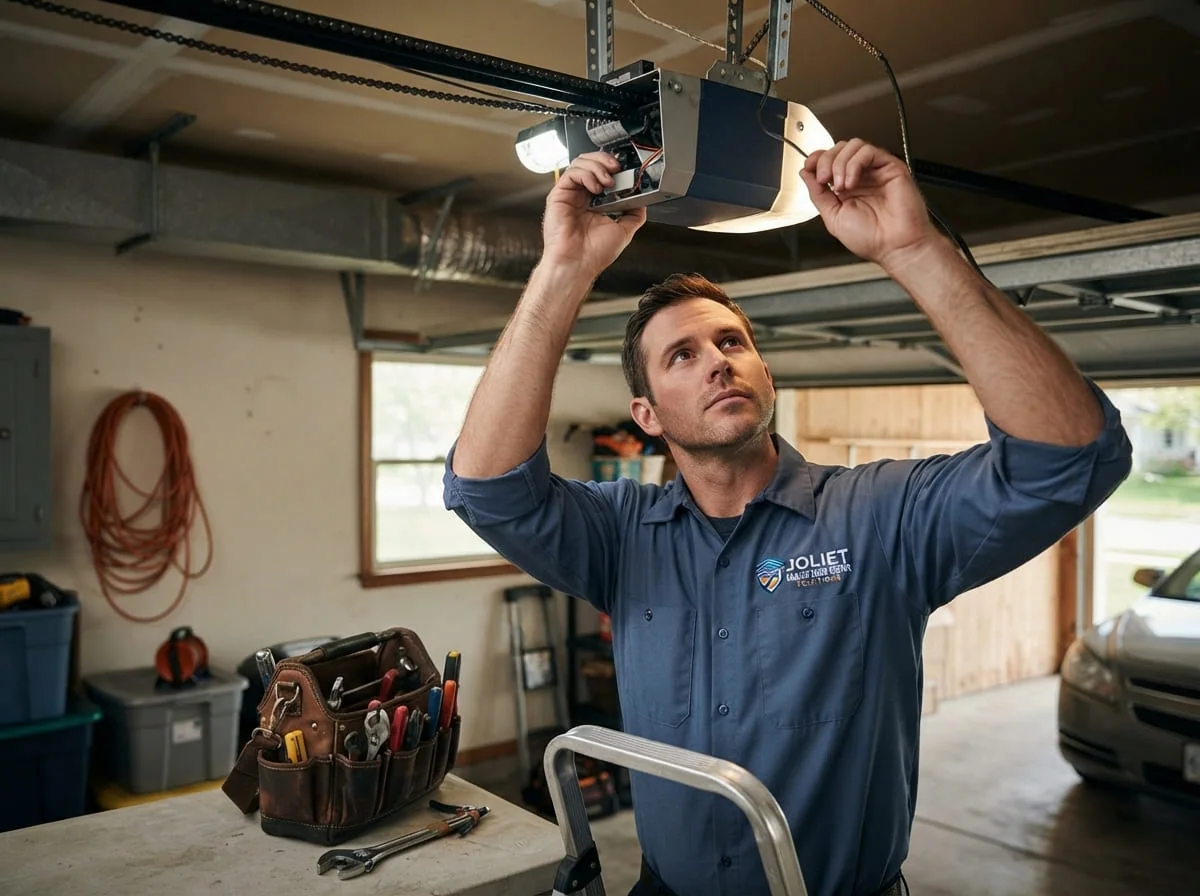
A garage door is the largest moving object on most Joliet homes, and it's usually the first thing a visitor or a buyer notices from the street. It's also a bigger factor in your energy bill than most homeowners realize, since a poorly insulated or misaligned door lets conditioned air escape through the garage all winter long — and that matters here, where January mornings routinely sit in the teens. Whether you're replacing a door that's finally given out after fifteen or twenty years, or updating one that just looks dated next to a remodeled front of the house, the choice affects your home's insulation, noise level, and curb appeal for a long time.
Joliet's housing stock is varied enough that one style rarely fits the whole city. The East Side and Upper Bluff historic districts tend to look right with a more traditional carriage-house style, while newer construction out toward Crest Hill and New Lenox usually favors clean steel panels with minimal hardware. We walk homeowners through the real options in person rather than pointing at a catalog page, because a door that reads as too modern against a 1920s East Side bungalow — or too plain against a stone-front colonial — is something you'll be looking at every single day.
Danny Kowalski has been doing this work in Joliet since 2015, and the company's approach hasn't changed since it was one truck: explain what's actually going on with your current door, and what a replacement will realistically involve, before quoting anything. That means an honest conversation about whether your door needs full replacement or whether a repair will genuinely buy you several more good years, not just an upsell.
Signs Your Residential Garage Door Needs Attention
Most homeowners don't think about their garage door until it stops working, but a residential door usually gives warning signs well before that point. Catching them early is the difference between a straightforward repair and a door that fails in the middle of a cold snap.
- Visible sagging in the middle of one or more panels, especially on older non-insulated steel doors
- Daylight visible along the bottom seal or between panels when the door is closed
- The door feels noticeably heavier when lifted by hand with the opener disconnected
- Rust bubbling through the paint, or delamination where the steel skin separates from the insulation core
- The opener straining, reversing unexpectedly, or taking longer than it used to on the same door
- Mismatched panel color or texture from a prior partial repair that never quite matched the original
Any one of these on its own might be a minor fix. Several at once usually means the door itself, not just a part, is reaching the end of its useful life.
Choosing the Right Door for Your Joliet Home
Residential garage doors come in a few core material types, and the right one depends on your home, your budget, and how much you use the garage as living space. Steel doors remain the most common choice because they hold up well and come in single, double, or triple-layer construction, with more layers adding both strength and insulation value. Carriage-style doors — swing-style hardware on a modern sectional track — are popular in older Joliet neighborhoods because they echo the look of a real carriage house without the maintenance of one.
Insulation matters more here than in milder climates. A door's R-value, the same rating ENERGY STAR uses for windows and other building components, tells you roughly how well it resists heat transfer. If the garage sits under a bonus room, backs up to a kitchen wall, or you park a vehicle you'd rather not have freeze overnight, a higher R-value door is worth the difference in comfort and in what the furnace or attached HVAC has to work against.
We also factor in what fits the house. A door that's technically well-built but visually out of place — full-view glass on a traditional Cathedral Area craftsman, for instance — can actually hurt resale value even though nothing is wrong with it mechanically.
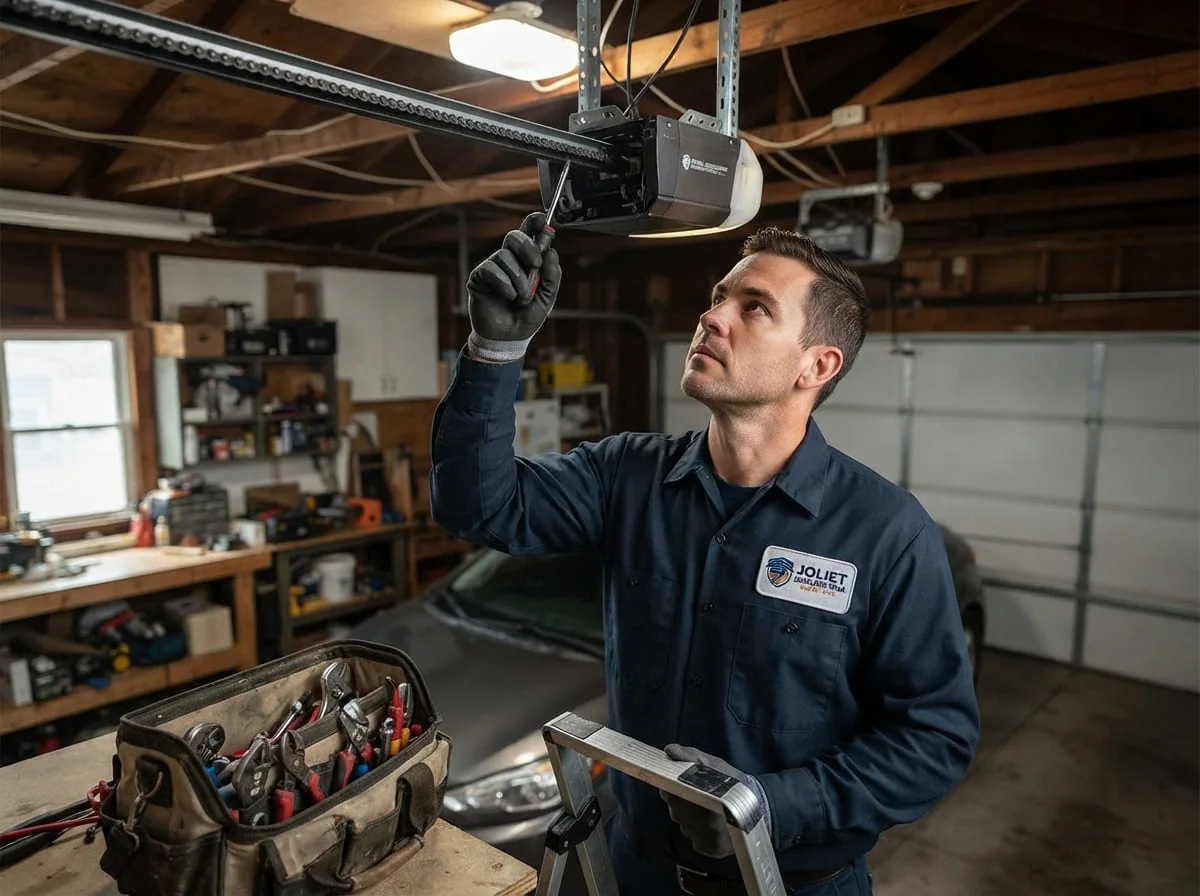
How Illinois Winters Test a Residential Garage Door
Joliet's humid continental climate is hard on garage doors in ways that aren't obvious until something breaks. Cold temperatures cause torsion springs to contract, which changes the tension they're holding and is a major reason spring failures cluster in the coldest months. Metal tracks contract too, and a track that was fine in August can bind or pull slightly out of alignment by January, especially if the slab has shifted at all from freeze-thaw cycling underneath.
Rollers matter as much as springs. Older nylon rollers get brittle in sustained cold and are more prone to cracking or chipping, which shows up as a grinding or clunking sound during operation. Opener lubricant thickens in low temperatures too, so a door that seemed to open fine in October can start to labor by December even with nothing mechanically wrong yet — that's usually an early sign to have things checked before a part actually fails.
None of this means a residential door is a bad investment in this climate. It means routine seasonal attention, and a door and hardware sized correctly for the temperature swings, go a long way toward avoiding a spring failure or an off-track panel on the coldest morning of the year.
Why DIY Door Swaps and Panel Work Are Risky
Replacing a residential garage door yourself looks straightforward in a video, but a fully assembled sectional door with its torsion spring system under tension is one of the more dangerous DIY projects a homeowner can take on. A torsion spring stores enough energy to cause serious injury if it's released in an uncontrolled way, and extension springs carry their own risk if they aren't fitted with proper safety cables, which is a requirement the U.S. Consumer Product Safety Commission has flagged for years.
Beyond the spring system, panels themselves are heavy and awkward for one or two people to align correctly, and an opener's travel limits and force settings need to be recalibrated after any panel or track change — get that wrong and the safety reversal feature may not work the way it's supposed to. We'd rather a homeowner call us before starting a project like this than after something has already gone wrong.
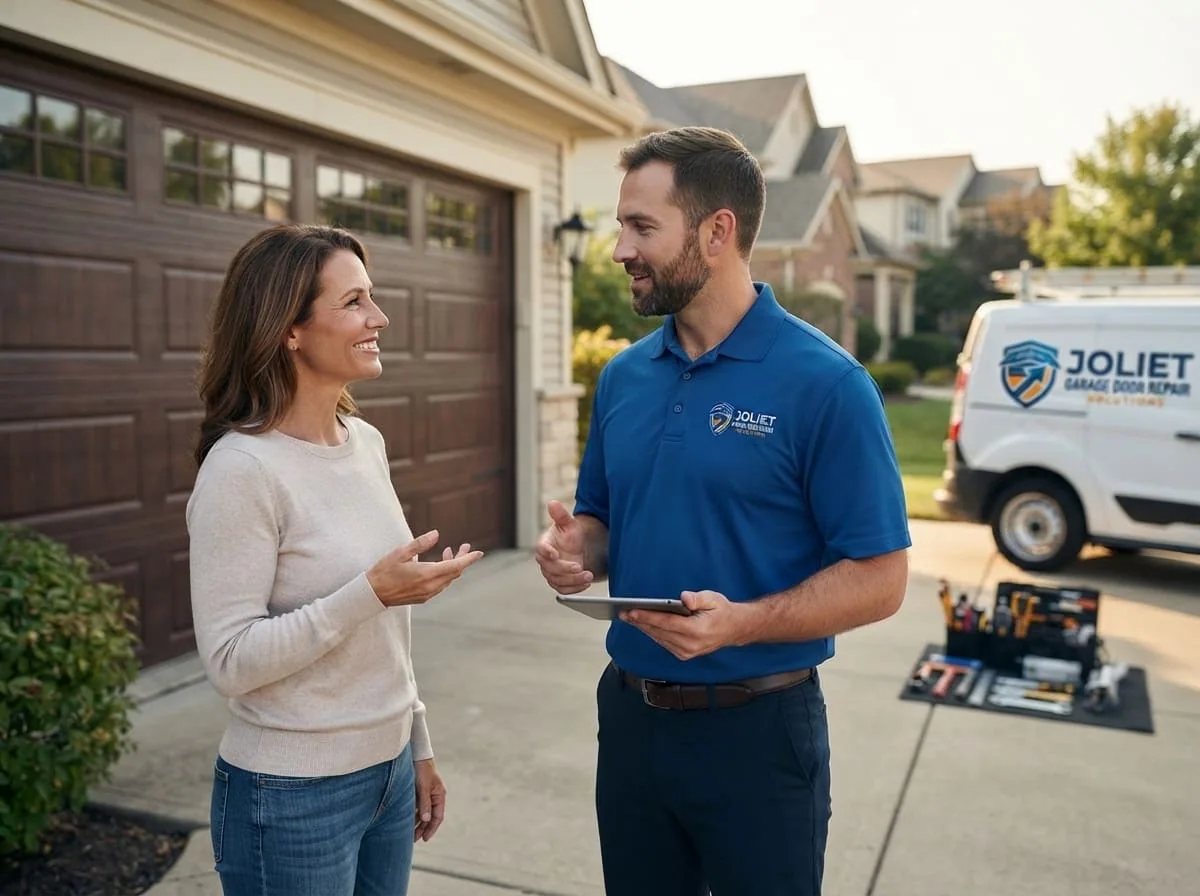
Repair, Replace, or Just Maintain? How We Help You Decide
Not every worn-looking door needs to be replaced, and we're not going to tell you it does. A single dented panel on an otherwise sound door is usually a repair or a panel swap. A door with rust coming through the steel skin in multiple spots, springs original to a fifteen-year-old install, and an opener that's been struggling for months is a different conversation, and we'll say so plainly.
Our technicians walk the whole system during a service call — panels, springs, tracks, rollers, and the opener — and explain what's actually driving the problem before recommending anything. If a repair genuinely gets you several more solid years, that's what we'll suggest. If the door is past that point, we'll lay out realistic replacement options and what they cost to have installed, with no pressure either way.
Why Joliet Homeowners Choose Joliet Garage Door Repair Solutions
We've been locally owned and operated in Joliet since 2015, and Danny Kowalski still answers the phone himself whenever he isn't already on a call. Our technicians are insured and background-checked, and every quote is upfront and honest before any work begins — no surprise line items once the job is underway.
We offer same-day appointments where possible and stand behind our installs and repairs with workmanship-backed service. Whether you need a single panel replaced or a full residential door swap, we treat the job the way we'd want it done at our own house.
What to Expect When You Call
Free In-Home Assessment
A technician inspects your current door and hardware in person and talks through your goals and budget with no pressure to buy anything on the spot.
Door and Material Walkthrough
We review the styles, materials, and insulation levels that make sense for your home and give you upfront pricing before you commit to anything.
Installation or Repair Day
Our crew removes the old door safely or completes the repair, installs new hardware, and balances the spring system to the correct tension.
Final Safety Check and Walkthrough
We test the opener's force settings and safety reversal, then walk you through basic operation and care before we leave.
Residential Garage Doors in Joliet, IL FAQs
How much does a new residential garage door cost in Joliet?
Cost depends on the door's size, material, number of insulation layers, and options like windows or a matching opener, so we don't quote a number sight unseen. We provide a free, upfront quote after seeing your door and opening in person.
How long does it take to install a new garage door?
A single residential door is typically removed and installed in about a day by one crew. Double doors, unusual openings, or jobs that require framing or track adjustments can take longer.
Can I replace a garage door myself?
We don't recommend it. A torsion spring holds enough stored energy to cause serious injury if it's released incorrectly, and extension springs need proper safety cables per CPSC guidance. Panel alignment and opener force settings also need to be right for the safety reversal system to work.
What's the real difference between an insulated and non-insulated door?
Insulated doors use multiple layers with a foam core, giving them a higher R-value that resists heat transfer better than a single steel skin. In Joliet's winters that generally means a quieter, more temperature-stable garage and less strain on an opener working against cold, stiff hardware.
Do I need a permit to replace a garage door in Joliet?
Swapping a door on an existing opening typically doesn't require a separate permit, but changes to structural framing or a new garage do. It's worth confirming the specifics for your project with the City of Joliet's building department before work starts.
How do I know if I need a new door or just a repair?
A single bent panel, a worn roller, or a spring nearing the end of its cycle life is usually a repair. Rust through the steel skin in multiple spots, chronic misalignment, or a door that's original to a much older home usually points toward replacement, and we'll tell you honestly which situation you're in.
Need Residential Garage Doors in Joliet, IL?
Joliet Garage Door Repair Solutions is ready to help — call now for a free, upfront quote.