
Garage Door Roller Repair in Joliet, IL
A grinding, shaking, or hesitating garage door is usually a roller problem, not a spring problem. We diagnose it correctly and fix it the same day where possible.
- Locally owned since 2015
- Insured, background-checked techs
- Free upfront quotes
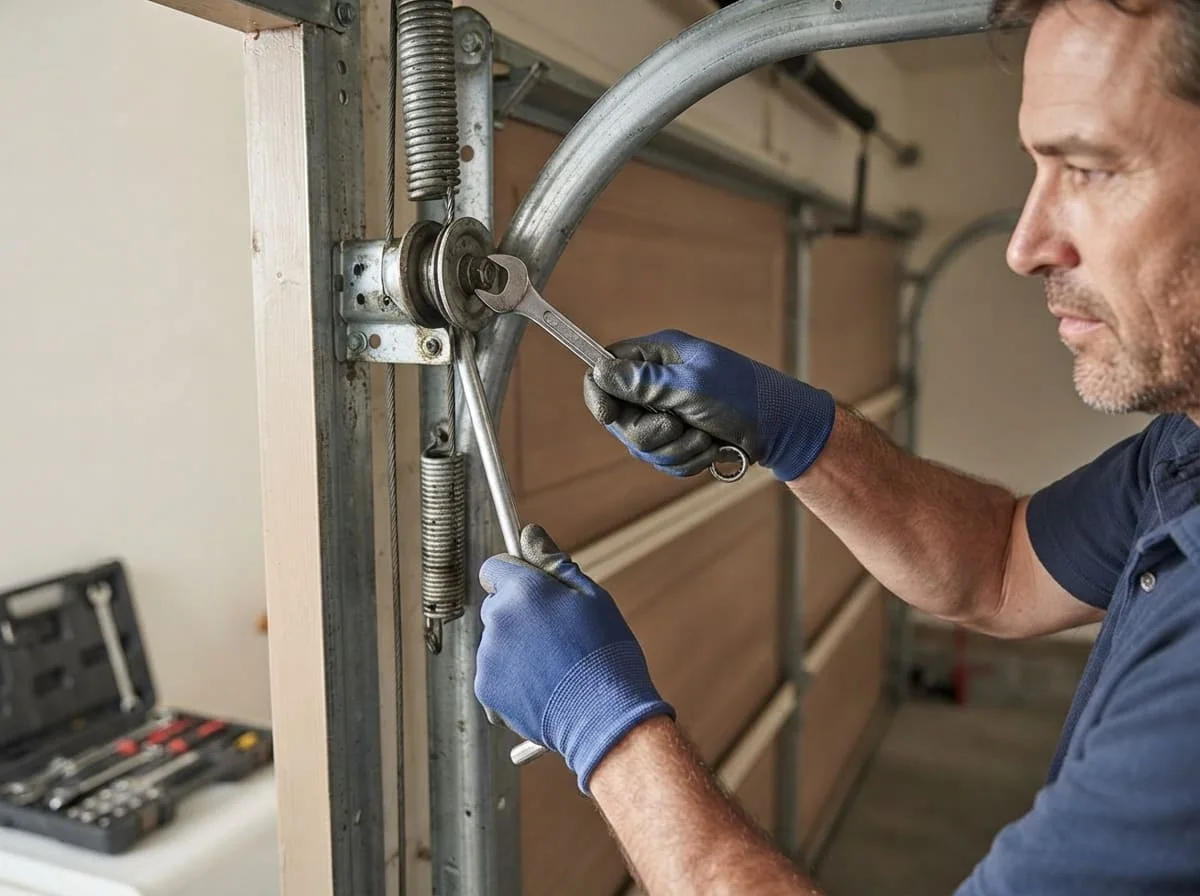
A garage door that grinds, jerks, or shudders as it opens usually isn't a spring problem or an opener problem — it's the rollers. Every sectional garage door rides on a set of ten to twelve rollers set into brackets along each edge of the panels, and when those rollers wear out, chip, or seize, the door has to fight its own track instead of gliding through it. Joliet Garage Door Repair Solutions has been diagnosing and fixing roller problems on doors across Joliet and Will County since 2015, and it's one of the more common calls we get, especially once the weather turns cold.
Most residential doors use one of two roller types: nylon rollers with sealed ball bearings, or steel rollers with exposed bearings. Nylon rollers run quieter and need less track lubrication, but they're more sensitive to Joliet's winter temperature swings — the material stiffens in a cold garage and can develop flat spots or hairline cracks over a season or two. Steel rollers hold up better to heavier use but are louder and depend on periodic lubrication to keep the bearings from drying out. Either type eventually wears enough that the door starts binding in the track, and if it goes unaddressed long enough, the wear pattern can start damaging the track itself.
Roller failure is rarely sudden. It builds gradually — a little extra noise, a slight hesitation at the same spot every cycle, a wobble as a panel passes through — which usually gives homeowners a window to get it looked at before a roller jumps the track entirely or cracks a track flange. That's the repair call we'd rather get.
Signs Your Garage Door Rollers Need Attention
Roller wear has a recognizable pattern once you know what to listen and look for. Most of these signs show up gradually, which is why they're easy to write off as "the door's just old" until the problem gets worse.
- Grinding, squealing, or popping noise concentrated at the same point in every open/close cycle
- Visible side-to-side wobble or shimmy as a panel passes through the track
- The door hesitating, jerking, or briefly catching at the same spot each time
- Rollers that look flat on one side, chipped, cracked, or coated in dried grease and grit
- Metal shavings or nylon dust collecting in the track or on the garage floor
- One side of the door appearing to lag or drop slightly behind the other during travel
Any one of these on its own is worth a look. Several together usually mean the rollers are past the point of adjustment and need replacement.
How Roller Repair and Replacement Works
Because rollers sit close to a door under spring tension, the repair starts with securing the door so it can't shift or fall while the technician works — usually with the door in the closed or a fully supported position and locking pliers clamped on the track above the bottom roller as a safety stop. From there, each roller bracket or hinge is unbolted, the old roller and stem are pulled from the track, and the stem length and gauge are matched to a replacement rated for the door's weight and roller count.
Rollers are typically replaced in a full set rather than one at a time, since if one has worn out from age or mileage, the others are usually close behind. Once the new rollers are seated, the technician checks track alignment along the full run, tightens any loose track brackets, and lubricates the rollers and track appropriately for the roller type. The door then gets cycled several times under observation to confirm it's running smooth and quiet before the technician calls it done.
Why DIY Roller Replacement Is Risky
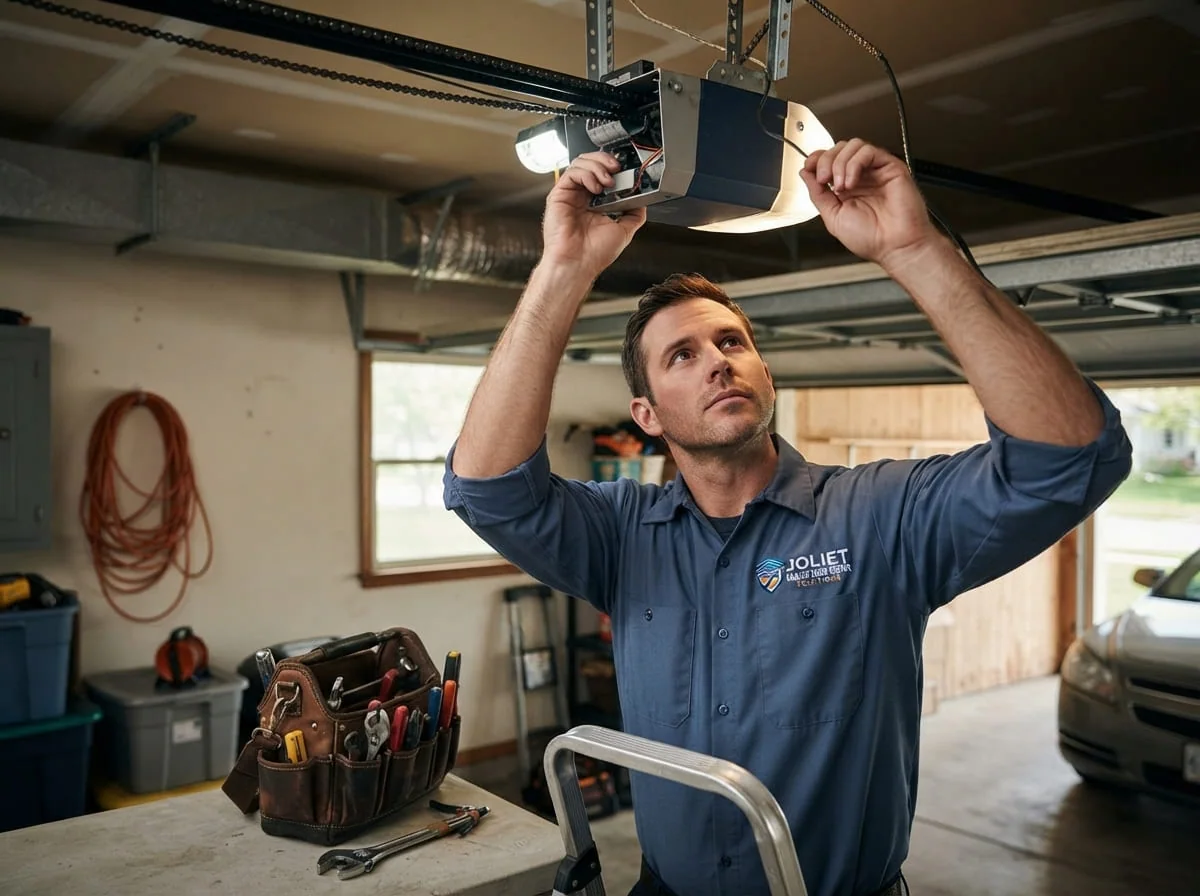
Swapping the bottom two rollers on some doors is a manageable weekend task for a handy homeowner. Working on rollers anywhere near the bottom brackets, cables, or a door that's already off track is a different situation. The bottom roller brackets anchor the safety cables that run alongside the springs, and if a cable comes loose or a spring is still under partial tension while a bracket is off, the door can drop suddenly or a cable can whip free with real force behind it.
Ladder work adds its own risk — most garage doors are eight to ten feet tall fully raised, and reaching the upper rollers means working overhead near a heavy panel that isn't necessarily secured the way a technician would secure it. We'd rather walk a customer through what we're seeing over the phone and get a technician out than have someone get hurt trying to save a service call.
How Joliet Winters Affect Garage Door Rollers
Joliet's winters are hard on garage door hardware generally, and rollers are no exception. When temperatures sit in the teens and twenties for weeks at a time, nylon rollers stiffen and lose some of the flexibility that lets them absorb small imperfections in the track. A roller that was quietly cracking all summer can finally give out on a cold January morning. Freeze-thaw cycles also shift concrete slabs slightly over years, which can throw off track alignment just enough that rollers wear unevenly on one side.
Steel rollers have their own cold-weather issue: the grease inside the bearings thickens in low temperatures, which is part of why a door that ran fine in October can start grinding by December even without new physical damage to the roller. Keeping the track clean and appropriately lubricated going into winter is one of the simplest ways to extend roller life through a Joliet cold season.
Roller Repair vs. Track or Panel Replacement
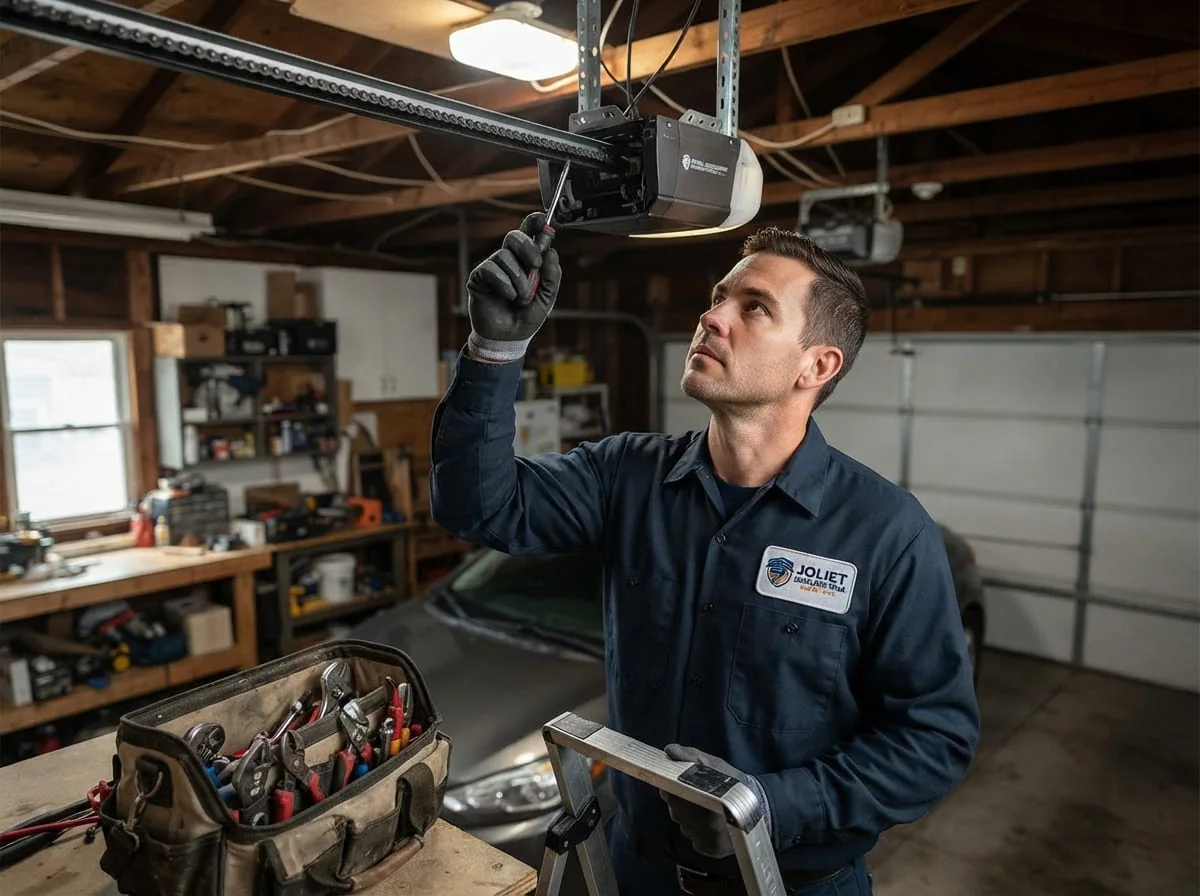
Not every roller call ends with just new rollers. If worn rollers have been binding for a long time, the track itself can develop bent flanges or a worn groove that a new roller won't glide through cleanly — in that case, track sections need straightening or replacement alongside the rollers. Occasionally the roller stem hole in a panel's hinge has elongated from years of a loose-fitting roller, which points toward hinge or panel repair rather than a simple roller swap.
The technician will walk through exactly what they find before recommending anything beyond the rollers themselves, and pricing reflects what the door actually needs — not a package deal. Upfront, honest pricing means the homeowner knows what's being replaced and why before any work starts.
Why Choose Joliet Garage Door Repair Solutions
Joliet Garage Door Repair Solutions has been repairing garage doors across Joliet and the surrounding Will County suburbs since 2015. Owner Danny Kowalski grew up on Joliet's East Side and worked as a technician for a regional overhead door company before starting this business out of a single truck, and he still answers the phone himself whenever he isn't already on a call. Technicians are background-checked and insured, and every job starts with an honest explanation of what's actually wrong before any quote is given.
We offer same-day appointments where possible and free upfront quotes on roller repair and every other service we run, with workmanship-backed repairs on the work we complete. Whether it's one wobbly panel or a full set of worn-out rollers, we'd rather diagnose it right than guess.
What to Expect When You Call
Phone diagnostic
We ask a few questions about the noise, wobble, or hesitation you're seeing and schedule a same-day appointment where possible.
On-site inspection
The technician inspects every roller, the track, and the hinge brackets to confirm the rollers are the actual problem before quoting anything.
Upfront quote
You get a clear, honest explanation of what's worn and what it will take to fix, with pricing given before any work begins.
Roller replacement
Old rollers are removed one bracket at a time and replaced with new rollers matched to your door's weight and stem gauge.
Alignment, lubrication, and test cycle
The track is checked for alignment, rollers and track are lubricated, and the door is cycled repeatedly to confirm it runs smooth and quiet.
Garage Door Roller Repair in Joliet, IL FAQs
How much does it cost to fix garage door rollers?
Cost depends on how many rollers need replacing, whether they're nylon or steel, and whether the track itself needs straightening. We provide a free, upfront quote before any work starts so there are no surprises.
Can I replace garage door rollers myself?
The top rollers and any work near the bottom brackets involve cables and spring tension that can cause serious injury if handled wrong, so we generally recommend having a technician handle it. It's a quick job for someone trained to secure the door safely first.
How long does roller repair take?
Most roller replacements are finished in a single visit, usually within an hour or two depending on how many rollers need replacing and whether the track needs adjustment.
What's the difference between nylon and steel garage door rollers?
Nylon rollers with sealed ball bearings run quieter and need less lubrication but can get brittle in cold weather. Steel rollers hold up to heavier use and rough conditions but run louder and need periodic lubrication.
Will worn rollers damage my garage door track?
Yes, if left long enough. A roller that's flat, chipped, or seized forces the door to grind against the track instead of rolling through it, which can bend the track flange or wear a groove over time.
How often do garage door rollers need to be replaced?
It depends on the roller type and how many cycles the door sees each day, since rollers are rated by manufacturers for a certain cycle life much like springs. A door used several times a day will wear rollers faster than one used occasionally.
Is a noisy garage door always a roller problem?
Not always — worn hinges, a dry opener chain, loose hardware, or aging springs can all cause noise too. That's why we inspect the whole system rather than assuming it's the rollers.
Need Roller Repair in Joliet, IL?
Joliet Garage Door Repair Solutions is ready to help — call now for a free, upfront quote.