
Noisy Garage Door Repair in Joliet, IL
A garage door that grinds, squeals, or bangs every time it moves is telling you something is wearing out. We track down the exact cause and quiet it down, often the same day you call.
- Locally owned since 2015
- Insured, background-checked techs
- Free upfront quotes
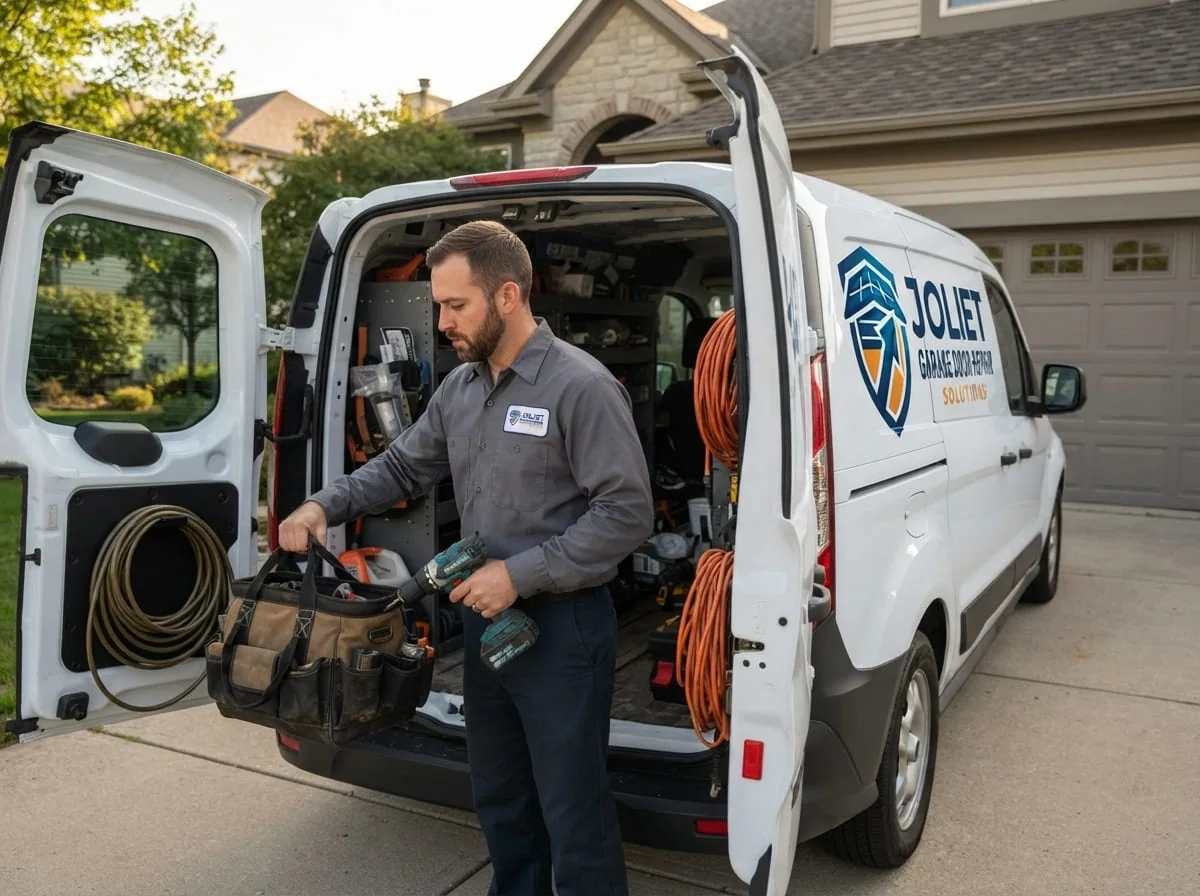
Every garage door makes some noise. What Joliet homeowners call us about is different: a grinding sound on the way up, a sharp bang partway through the cycle, or a squeal that gets worse every week. That kind of noise almost always traces back to a specific mechanical cause, not just "an old door," and figuring out which one matters before anyone reaches for a can of lubricant.
Danny Kowalski and the crew at Joliet Garage Door Repair Solutions have been running down these noises since 2015, from East Side bungalows with original hardware to newer builds out in Crest Hill and New Lenox. A door that used to run quiet and suddenly doesn't is usually cheaper to fix the sooner it's caught, since a worn roller or a loose bracket left alone tends to wear out the parts around it too.
We diagnose the actual source of the noise on site rather than guessing over the phone, then explain what we found and what it will take to fix before any work starts.
What Your Garage Door's Noise Is Actually Telling You
Different noises point to different problems, and homeowners are often surprised how specific the diagnosis can get just from the sound pattern.
- Metallic grinding or scraping — usually worn rollers, especially old steel or nylon rollers that have lost their smooth surface.
- A rhythmic squeak that speeds up as the door moves — dry hinges, worn roller bearings, or a spring that needs lubrication.
- A loud bang or pop partway through the cycle — often a spring shifting, a loose bracket, or a track section that has come slightly loose from the wall.
- Rattling along the whole cycle — loose hardware: hinges, roller brackets, or the track fasteners themselves.
- A humming or straining opener motor without much door movement noise — this points to the opener or drive system rather than the door itself.
None of these are things to just live with. A noise that shows up suddenly is the door telling you a part has already started to fail.
Common Causes We Find on Service Calls
On most noisy-door calls, the cause is one of a handful of usual suspects:
- Worn rollers — nylon rollers wear down and get flat spots; steel rollers without bearings get louder as they age. This is one of the most common fixes we make, often paired with our roller repair service.
- Loose hardware — hinges, brackets, and track bolts loosen over thousands of open-close cycles and need periodic tightening.
- Dry or corroded moving parts — hinges, rollers, and springs need the right lubricant, applied correctly, not a general household spray.
- Track misalignment — a track that's bent, loose, or slightly out of parallel makes rollers grind against metal instead of rolling smoothly. This overlaps with track repair and, in more serious cases, off-track door repair.
- Spring wear — a torsion spring nearing the end of its cycle life can make popping or grinding noise before it fails outright; if that's what we find, it falls under our spring repair work.
- Opener issues — worn drive gears or a chain that needs tension adjustment can sound like the door itself when the real source is the opener unit.
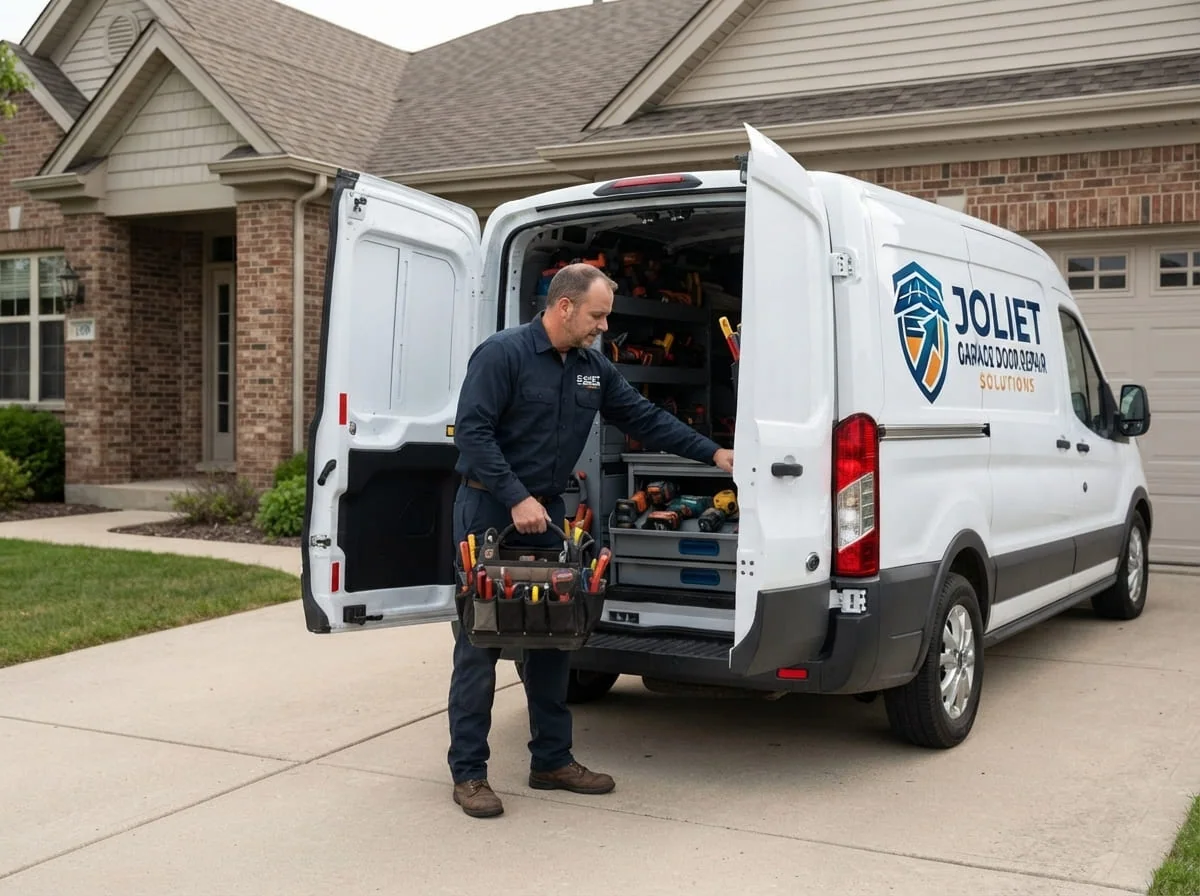
Why Joliet Winters Make Doors Louder
Will County winters put real stress on garage door hardware, and noise is often the first sign of it. When temperatures drop toward that January average low near 16°F, steel components contract slightly, which can tighten tolerances in the track and make rollers bind rather than glide. Lubricant on hinges, rollers, and springs thickens in the cold, so parts that ran quiet in summer start squealing once the mercury drops.
Nylon rollers get more brittle in freezing weather too, and a roller that was already worn is more likely to crack or develop flat spots during a cold snap. Freeze-thaw cycles can also shift a concrete slab slightly over the years, which nudges the track out of true alignment and adds grinding noise that wasn't there before.
A quick seasonal lubrication and hardware check before the cold really sets in — something we build into a standard service call — catches most of this before it turns into a bigger repair.
Why DIY Noise Fixes Often Fall Short (or Backfire)
Spraying WD-40 or a similar household lubricant on a noisy door is the most common DIY move, and it usually makes things quieter for a week or two before the noise comes back, sometimes worse. General household lubricants attract dust and grit, which can accelerate wear on rollers and hinges rather than protecting them.
Tightening hardware yourself is reasonable for hinges and roller brackets you can reach safely from a stepladder. Where we tell homeowners to stop is anything involving the torsion spring assembly above the door. A torsion spring holds enormous stored tension, and loosening or adjusting the wrong bolt near it can cause the spring to release suddenly. Danny has been careful about this since early in his career, after watching a coworker get seriously hurt when an extension spring let go during a rushed repair — it's part of why every technician here treats spring-adjacent hardware as a call-a-professional situation, not a weekend project.
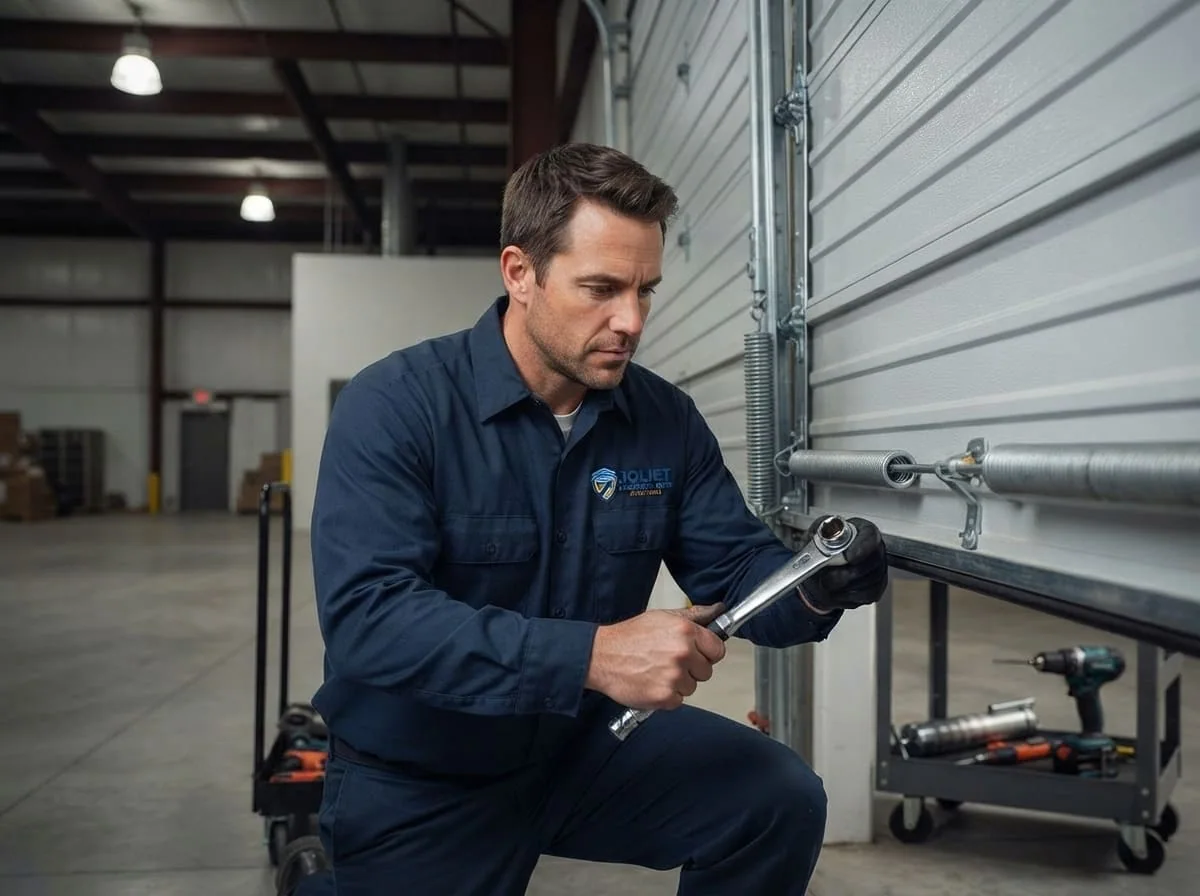
How We Diagnose and Fix a Noisy Garage Door
We run the door through a full cycle first, listening and watching for exactly where in the movement the noise happens and what it sounds like. That alone rules out several possible causes. From there we inspect rollers, hinges, track alignment, spring condition, and the opener's drive components, and we point out anything else that's starting to wear even if it isn't making noise yet.
Most noisy-door calls are resolved in a single visit: lubricating with the correct product for each part, tightening hardware to spec, replacing worn rollers, or adjusting track alignment. If the noise traces back to a spring nearing failure or a more involved track problem, we explain what's involved and quote that work separately before doing anything.
Why Joliet Homeowners Call Us for This
We've been running these calls across Joliet and the surrounding suburbs since 2015, from East Side to Shorewood, Crest Hill, and Romeoville, and a noisy door is one of the most common reasons the phone rings. Our technicians are background-checked and insured, we give upfront, honest pricing before any work starts, and we offer same-day appointments where possible because a noise that's getting worse rarely fixes itself while you wait.
Danny still answers the phone himself whenever he's not already on a call, and every repair gets treated the way he'd want his own family's garage door handled — no shortcuts, especially anywhere near a spring.
What to Expect When You Call
Tell us what you're hearing
Call and describe the sound and when it happens; that alone helps us prepare the right parts for the visit.
On-site sound diagnosis
A technician runs the door through a full cycle to pinpoint exactly which component is causing the noise.
Upfront quote
We explain what we found in plain terms and quote the fix before any repair work begins.
Repair and lubrication
We tighten hardware, replace worn rollers, adjust the track, or lubricate moving parts as needed.
Full-cycle test
We run the door through several cycles to confirm it's quiet and moving smoothly before we leave.
Noisy Garage Door Repair in Joliet, IL FAQs
Why is my garage door suddenly so much louder than it used to be?
A sudden change in noise almost always means a specific part has worn out or come loose, such as a roller, hinge, or track bracket, rather than general aging. Cold weather can also make an already-worn part noisier very quickly.
Can I fix a noisy garage door myself?
Tightening accessible hinges and roller brackets is reasonable for most homeowners. We recommend against adjusting anything near the torsion spring assembly, since it holds significant tension and can release suddenly if handled incorrectly.
Will spraying WD-40 on my garage door fix the noise?
It often quiets things temporarily, but household lubricants attract dust and grit that can wear rollers and hinges faster over time. A proper garage door lubricant applied to the right parts holds up much better.
How much does it cost to fix a noisy garage door?
Cost depends on the cause: a lubrication and hardware tightening visit is far less involved than replacing worn rollers or correcting a misaligned track. We provide a free upfront quote once we've diagnosed the actual issue, before any work begins.
How long does it take to fix a noisy garage door?
Most noisy-door calls are resolved in a single visit, typically within an hour or two, depending on which parts need attention.
Is a noisy garage door dangerous?
A noise by itself usually isn't an emergency, but it's often an early warning of a part that's close to failing, such as a spring or worn roller. Addressing it promptly is safer and usually less expensive than waiting for a full breakdown.
Does cold weather really make garage doors noisier?
Yes. Cold temperatures thicken lubricant, contract metal components, and make nylon rollers more brittle, all of which can turn a minor squeak into a noticeable grind during a Joliet winter.
Need Noisy Garage Door Repair in Joliet, IL?
Joliet Garage Door Repair Solutions is ready to help — call now for a free, upfront quote.